What it is, how it helps, and most importantly: does it hurt?!
This article is intended for educational and informational purposes only. It does not constitute medical advice, diagnosis, or mental health treatment, nor does reading it establish a professional treatment relationship. Please consult a qualified healthcare professional regarding your individual needs and circumstances.
“You want to stick what, where!?”
In so many words, that's a pretty common reaction when I tell people I offer a treatment that involves placing five tiny acupuncture needles in each ear.
Usually, a series of questions follows. And almost always, the first one is: Does it hurt?!
Fair question!
I've had so many of these conversations that I figured it was time to put the answers in one place. So, whether you're curious about 5NP, considering trying it, or just wondering why anyone would voluntarily have needles stuck in their ears, this article is for you.
5-Needle Protocol (5NP), sometimes called the NADA protocol or Acudetox, is a form of ear acupuncture that involves placing five thin, sterile, single-use needles in each ear.
The protocol uses five specific acupuncture points on the outer ear: Sympathetic, Shen Men, Kidney, Liver, and Lung. Each point has its own traditional associations within Chinese medicine, which we'll explore in more detail below.
Together, these five points make up a standardized protocol with roots in addiction treatment. Today, 5NP is used in a variety of behavioral health, recovery, and community settings.
It's a simple, non-verbal treatment intended to support regulation, grounding, rest, and stability.
If you're curious about the history of 5NP and its roots in community-based addiction treatment, I highly recommend watching the documentary Dope Is Death
There's nothing you need to talk through, process, or figure out while receiving 5NP. Once the needles are placed, you simply sit and rest. No special breathing techniques, no meditation, no effort required. Just an opportunity to be still and allow your body's natural capacity for balance and restoration to do its thing.
How Does 5NP work?
To understand how 5NP works, it helps to understand a little about Traditional Chinese Medicine (TCM), the system of healing from which acupuncture originates.
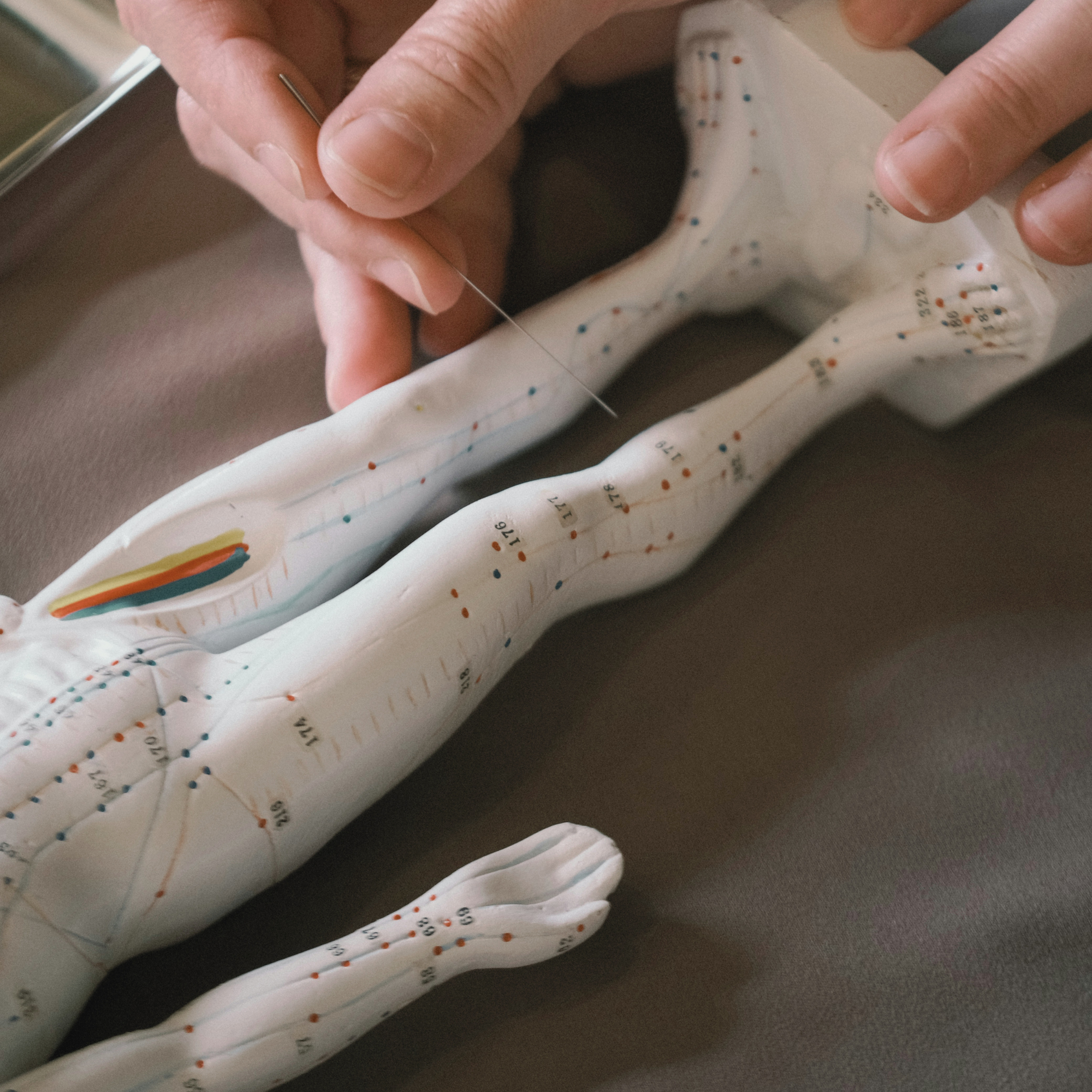
TCM is a system of health and healing that has developed over thousands of years. It views the body as an interconnected system, with physical, mental, and emotional well-being understood as closely related. Rather than focusing exclusively on individual symptoms, TCM emphasizes patterns of imbalance and the relationship between the body and its environment.
Central to this philosophy is the concept of qi (pronounced "chee"), often translated as vital energy or life force. In TCM, qi is understood to move throughout the body along pathways called meridians. These pathways are believed to connect different areas and functions of the body, supporting the movement of qi and the body's overall balance. While meridians have been central to Chinese medicine for thousands of years, their relationship to the body's physical structures and processes remains an area of scientific exploration.
If you're interested in exploring qi, meridians, and the science of energy healing more deeply, I highly recommend Phenomena: The Science & Stories of Energy Healing. It's a podcast I've really enjoyed and a great resource for anyone curious about these ideas.
Underlying this framework is the idea that living systems are constantly seeking balance. Our bodies are continually adapting to internal and external conditions, working to maintain stability and restore equilibrium when that balance is disrupted. From a TCM perspective, acupuncture is one way of supporting this natural tendency toward harmony.
Acupuncture involves placing very thin needles at specific points to influence the movement of qi and address patterns of imbalance. In 5NP, five particular points on the outer ear are used together, each with its own traditional associations.
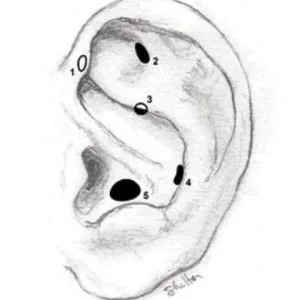
The five ear acupuncture points used in the 5-Needle Protocol (5NP). Illustration via Working Class Acupuncture
| Point | Traditional Associations |
|---|---|
| 1. Sympathetic | Calming the body's stress response and supporting balance between activation and relaxation. |
| 2. Shen Men | Often called the Spirit Gate. Associated with calming the mind, easing agitation, and emotional settling. |
| 3. Kidney | Associated with foundational energy, vitality, and addressing fear and exhaustion. |
| 4. Liver | Associated with the smooth movement of qi, emotional tension, frustration, and irritability. |
| 5. Lung | Associated with breath, grief, sadness, and the process of letting go. |
From a modern physiological perspective, acupuncture needles stimulate sensory nerves, which send signals to the central nervous system. Researchers are exploring how this stimulation influences processes such as pain perception, stress responses, and autonomic nervous system activity. This growing body of research offers another perspective on how acupuncture may interact with the body's existing regulatory systems.
What if I don’t believe in this stuff?
That's okay! You don't have to believe in qi, meridians, or Traditional Chinese Medicine to be curious about acupuncture or give 5NP a try. There's no particular mindset or belief system required, and you don't have to convince yourself that it's going to work.
You're welcome to approach the experience with curiosity, skepticism, or no expectations at all.
How can 5NP help?
Although 5NP has its roots in addiction treatment, its use has expanded into a variety of behavioral health, wellness, and community settings. People seek out 5NP for many different reasons, including support with:
Stress and anxiety: Feeling overwhelmed, agitated, tense, or having difficulty settling down.
Sleep and rest: Difficulty relaxing, winding down, or getting restorative rest.
Substance use recovery: Managing cravings and supporting emotional stability alongside other forms of treatment.
Emotional regulation: Feeling more grounded, centered, and able to navigate difficult emotions.
Periods of stress or transition: Finding moments of stability and rest during challenging or demanding times.
People's experiences with 5NP vary. Some report feeling noticeably calmer or more relaxed after a session, while others experience subtler changes over time.
5NP can be a valuable complement to the wellness practices and healthcare you're already receiving, whether that's psychotherapy, yoga, meditation, or other forms of care. Rather than replacing these approaches, it offers another way to support your overall well-being.
What happens during a 5NP Treatment?
The specifics can vary depending on where you receive 5NP. It may be offered individually or in a group setting, including behavioral health and recovery programs, community settings, clinics, or private sessions. The protocol itself is simple: five small needles are gently placed in each ear, and you rest quietly while they remain in place.
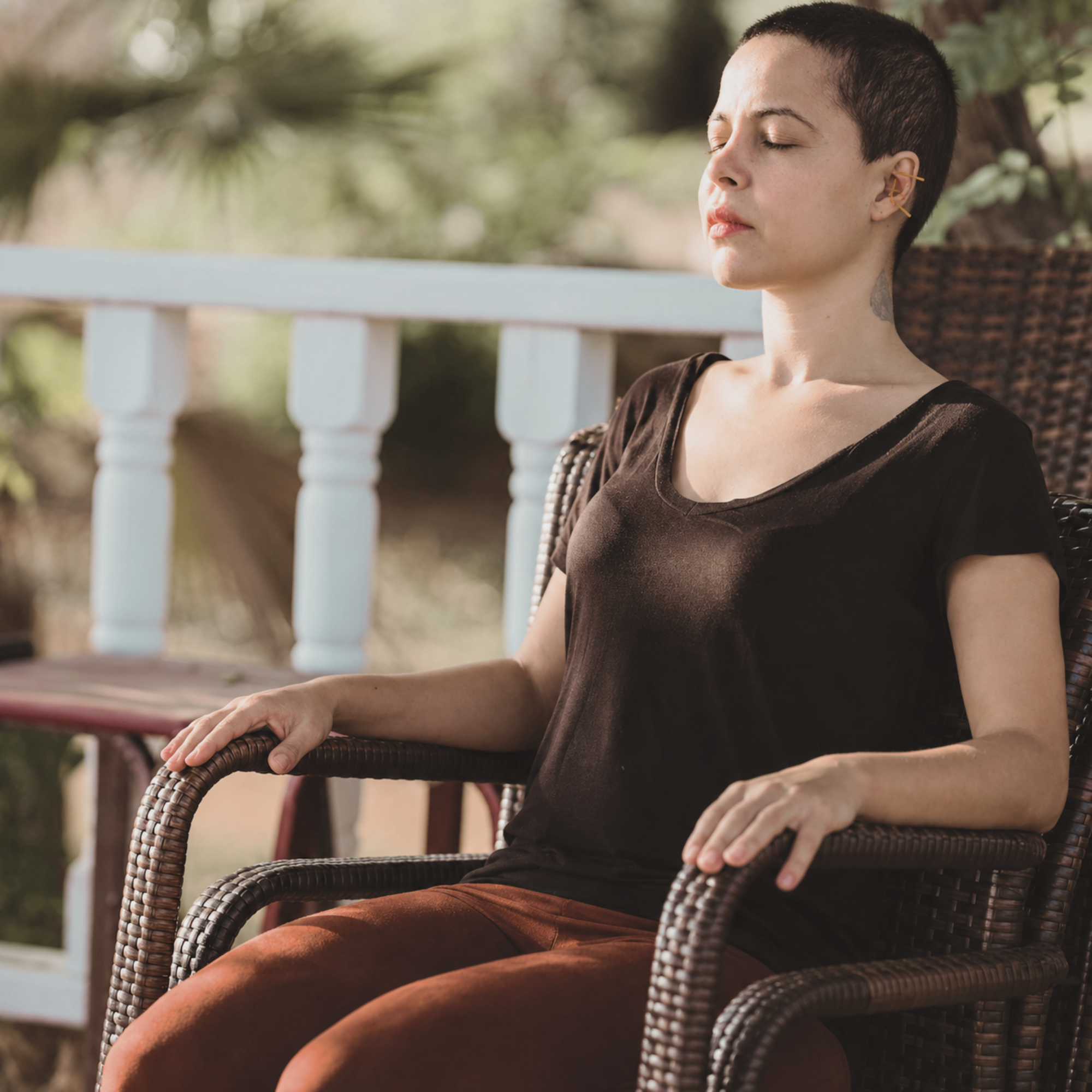
In my private 5NP sessions, I come to you. We'll get you comfortable in your own space, either seated in a chair or reclined, whichever you prefer. Placing the needles takes just a few minutes, and then you'll rest for about 45 minutes. You can close your eyes or keep them open, listen to music, or simply enjoy the quiet. There's nothing in particular you need to do.
During a session, some people feel deeply relaxed or notice a quieting of the mind or body. You might feel sleepy, notice a subtle shift, or not feel much of anything at all. Everyone's experience is different, and there's no particular response you're supposed to have.
You'll want to stay relatively still so the needles remain in place, but you're always in control of the experience. If you want or need to stop early, we simply remove them.
Does it hurt?
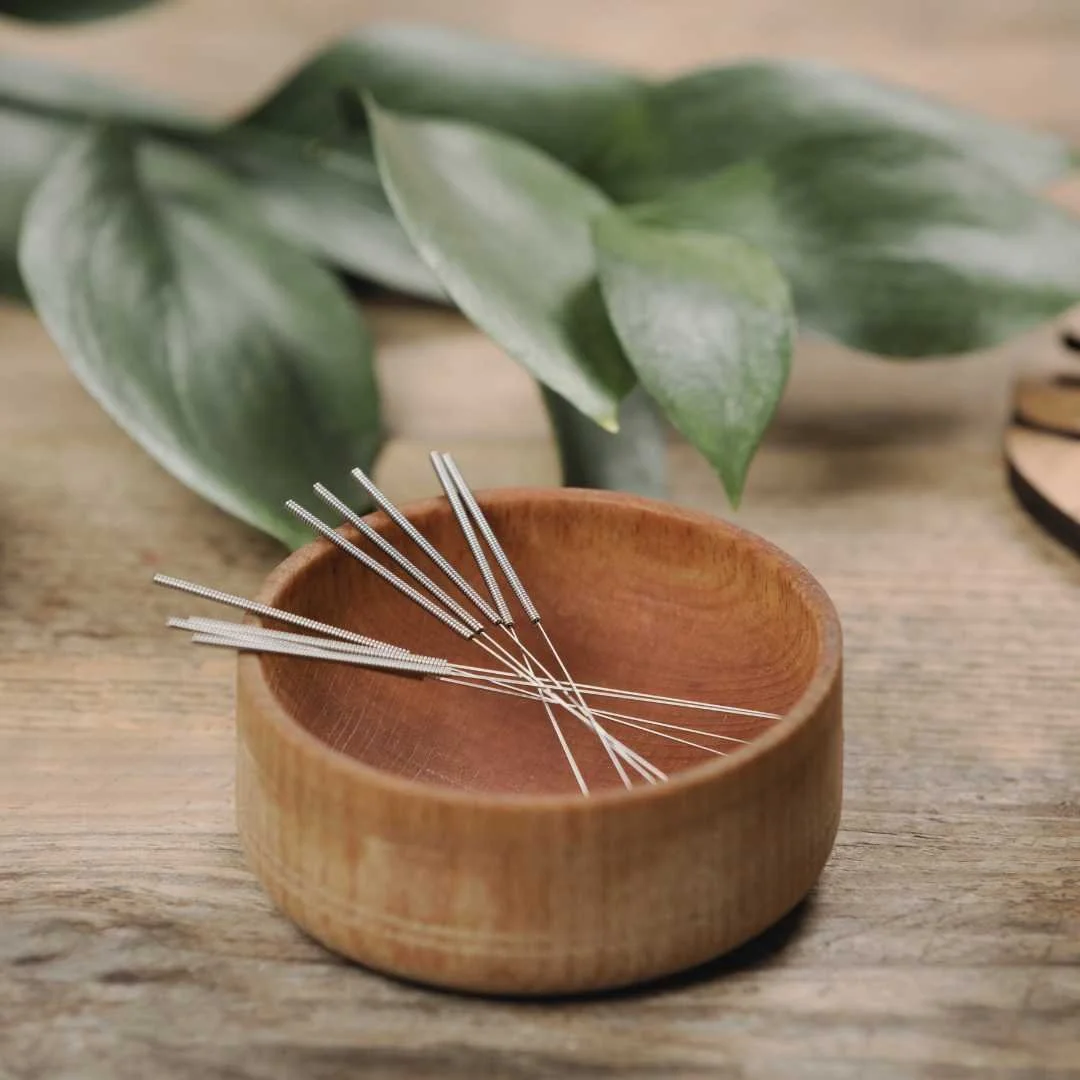
The acupuncture needles used in 5NP are very thin, much thinner than the needles used for injections. Some people barely feel them being placed, while others notice a brief pinch, pressure, or moment of sensitivity at certain points. Any discomfort usually passes quickly, but if a particular point continues to bother you, the needle can be adjusted or removed.
If you're nervous about needles or aren't quite ready to try acupuncture, ear seeds may be an alternative worth exploring. Ear seeds are tiny seeds or pellets held in place on specific points of the ear with adhesive. They provide gentle pressure without piercing the skin, offering a needle-free approach to auricular acupressure. If this sounds more appealing to you, talk with your practitioner about whether ear seeds might be a good option.
How often should I receive 5NP?
There's no single schedule that's right for everyone. Some people receive 5NP regularly as part of their ongoing wellness routine, while others seek it out during periods of increased stress, transition, or overwhelm.
How often you receive 5NP depends on your individual needs, what you're hoping to get from the experience, and how it fits into any other forms of care or support you're receiving.
You can talk with your practitioner about your goals and what frequency might make sense for you.
Is 5NP right for everyone?
5NP is generally well tolerated, but it may not be the right fit for everyone. Certain health conditions and circumstances may call for additional precautions or adjustments to treatment.
According to the National Acupuncture Detoxification Association (NADA), considerations include:
Fear of needles: People with significant needle anxiety or phobia may benefit from additional support, fewer needles, or needle-free alternatives such as ear seeds.
Bleeding disorders or blood-thinning medications: These can increase the risk of bleeding or bruising and may require additional monitoring.
Physical weakness or heightened sensitivity: People who are particularly weak, fatigued, or sensitive may benefit from a gentler approach, including fewer needles or a shorter session.
Skin conditions affecting the ears: Needles should not be placed in areas with active infections, wounds, rashes, irritation, or significant bruising until the skin has healed.
These considerations don't necessarily mean someone can't receive 5NP. Rather, they highlight the importance of communicating openly with your practitioner about your health, medications, and any concerns you may have.
If you're unsure whether 5NP is appropriate for you, talk with your practitioner and, when necessary, your healthcare provider before receiving treatment.
Source: National Acupuncture Detoxification Association (NADA), Acupuncture Detoxification Specialist Training Resource Manual, Fifth Edition (2017), Section IIA, pp. 34–36.
What is the aftercare for 5np?
There's no complicated aftercare required. Drink some water, take things a little more slowly if you can, and consider giving yourself some space before jumping into anything highly stimulating. Otherwise, you can generally go about the rest of your day as usual.
Afterward, some people report feeling calmer, more grounded, or more relaxed. Others may feel tired, energized, or notice very little difference. Occasionally, you may experience mild soreness at the needle sites, minor bruising, or brief lightheadedness. These experiences vary from person to person and are typically short-lived.
If you feel lightheaded, take a moment to sit or lie down until it passes. And if anything feels unusual, concerning, or doesn't resolve, contact your practitioner or seek medical guidance as appropriate.
Further Reading & Resources
If you're interested in learning more about 5NP, its history, or the community acupuncture movement, here are a few resources worth exploring:
People's Organization of Community Acupuncture (POCA) — A cooperative organization working to make acupuncture more affordable and accessible through community-based care. A great starting point for learning about the community acupuncture movement.
Dope Is Death — A documentary exploring the radical, community-led origins of the ear acupuncture protocol and its connection to addiction recovery and the Black liberation movement.
Phenomena: The Science & Stories of Energy Healing — A podcast I've really enjoyed that explores energy healing, traditional healing practices, and the questions surrounding how they work.
Interested in trying 5NP in Roanoke, Va?
If you're in the Roanoke, Virginia area and curious about trying 5NP for yourself, I offer private, in-home sessions. You can book 5NP on its own or combine it with private yoga for a deeper mind-body practice.
A little about the author

Hi, I’m Mel!
Aside from my primary role as a Shih Tzu butler, I'm a psychotherapist, yoga teacher, and 5-Needle Protocol practitioner based in Roanoke, Virginia.
My work brings together psychology, somatic practices, and holistic approaches to well-being.
Here, I share the ideas, research, and practices that inform my work, including what I've learned, what I'm still exploring, and what I think is worth passing along.