
grimoire
This is an introduction to the foundational language of astrology, designed to help you understand its patterns and themes.
Whether you’re exploring a natal chart or looking for a quick reference, you can return here to make sense of a placement or reconnect with its symbolic language.
Over time, this system will become more familiar, and less like a mystery.
[ jump to a section ] 👇
planets
archetypal energies
In astrology, the planets represent different archetypal energies. Each one reflects a particular aspect of human experience and expression.
Not all of them are technically planets in the astronomical sense, but astrologers use the term broadly for the celestial bodies we track in the sky. Some move quickly through the zodiac and tend to influence day-to-day experiences, while others move much more slowly and reflect broader generational themes.
-
☉ Sun
The domain of identity, vitality, and self-expression; where your sense of self develops and moves outward into the world.
The Sun represents your core identity, your sense of self, and what brings you to life. It reflects what feels most essential to you and the qualities you are consciously growing into over time. While often referred to as your “zodiac sign,” the Sun is just one part of the chart and does not tell the whole story.
It is closely tied to willpower, direction, and self-definition, showing how you move through life with intention and how you come to understand who you are. The Sun also relates to confidence and purpose, shaping how you express yourself and how you come to shine more fully as you grow into yourself.
As a transit, the Sun brings light to the area of life it is moving through, highlighting what is active and where your attention naturally goes in the present moment. It moves steadily, changing signs about once a month, giving a sense of focus and continuity to what is unfolding.
Wherever the Sun is in your chart, it points to where your energy is centered and the area of life where you are building confidence, expressing yourself, and developing a stronger sense of identity.
-
The domain of emotions, instincts, and inner experience; where your needs, habits, and sense of comfort take shape.
The Moon reflects your inner emotional world, your instincts, and the way you experience and process feelings. It is connected to your need for comfort, safety, and nourishment, both emotionally and physically. While the Sun describes how you shine outwardly, the Moon describes what is happening internally, often beneath the surface of conscious awareness.
It is closely tied to your habits, patterns, and the ways you respond to life on an emotional level, especially in moments of stress or vulnerability. The Moon can also point to early experiences, including your relationship to home, caregiving, and how you learned to seek and receive comfort. Over time, it shapes your understanding of what you need to feel supported, as well as how you tend to nurture yourself and others.
As a transit, the Moon reflects the emotional tone of the moment, bringing awareness to what you are feeling and what you may need. It moves quickly, changing signs every 2–2.5 days, so what you are experiencing may shift just as quickly.
Wherever the Moon is in your chart, it points to the area of life where your emotional world is most active, where your needs are most strongly felt, and where you seek comfort, familiarity, and a sense of belonging.
-
The domain of first impressions, instinctive responses, and your orientation to the world; the lens through which you approach life and how others first experience you.
Your Rising sign, or Ascendant, reflects how you present yourself to the world and the immediate impression you give when others first meet you. It shapes your natural way of entering new situations, your initial reactions, and the qualities that others often notice before they get to know you more deeply.
It is closely tied to instinctive behavior and unconscious responses, describing how you navigate unfamiliar environments and how you orient yourself in the moment. The Rising sign can also be reflected in your physical presence, body language, and overall style, offering subtle clues about how you move through the world. Over time, it becomes a bridge between your inner experience and your outward expression, shaping how your identity is carried and expressed in real life.
As the point that begins the chart, the Rising sign changes approximately every 2 hours and is the sign that was rising on the horizon at the moment you were born.
Your Rising sign sets the overall tone of your chart, influencing how your identity is expressed and how your experiences are filtered. It describes the way you meet the world, how others tend to perceive you at first, and the natural stance you take as you move through life.
-
The domain of thinking, communication, and perception; how you process information, make meaning, and exchange ideas with the world.
Mercury reflects how you think, speak, learn, and understand the world around you. It shapes your communication style, your inner dialogue, and the way you take in and organize information. It is closely tied to language, interpretation, and the ways you make sense of your experiences, both internally and in conversation with others.
It is also connected to learning, curiosity, and mental movement, describing how your mind works in real time and how you adapt to new information. Mercury can point to your natural style of problem-solving, how you ask questions, and how you translate thoughts into words. In this way, it acts as a bridge between what you perceive and how you express it, linking your inner world with your external environment.
As a transit, Mercury brings activity to the area of life it is moving through, highlighting communication, thinking, and the exchange of information. It often moves at a similar pace to the Sun, changing signs about every few weeks, though it occasionally slows down or reverses direction during retrograde periods, shifting how information is processed or understood.
Wherever Mercury is in your chart, it points to the area of life where your mind is most active, where you gather and exchange information, and where you are learning, thinking, and making sense of your experiences.
-
The domain of love, connection, and value; how you relate, what you are drawn to, and what brings you pleasure and meaning.
Venus reflects your approach to relationships, affection, and connection, as well as what you value in both people and experiences. It shapes how you express care, how you receive love, and the qualities you are naturally drawn toward. Venus is also tied to beauty, pleasure, and enjoyment, describing what feels good to you and what you find aesthetically or emotionally satisfying.
It is closely connected to your values and sense of self-worth, influencing what you prioritize, what you desire, and how you define fulfillment. Venus can point to the kinds of relationships you cultivate, your relationship to money and material resources, and the ways you create harmony in your life. Over time, it reflects how you learn to receive, attract, and engage with what feels meaningful and worthwhile.
As a transit, Venus brings attention to relationships, values, and pleasure, shifting the tone around connection, attraction, and what feels enjoyable or worthwhile. It moves more slowly than Mercury, typically changing signs every few weeks, allowing time to experience and reflect on what you are drawn toward and what you value.
Wherever Venus is in your chart, it points to the area of life where you seek connection and enjoyment, where you express affection and appreciation, and where your values, desires, and sense of worth are most actively expressed.
-
The domain of action, drive, and assertion; how you pursue what you want, respond to challenges, and use your energy.
Mars reflects your motivation, ambition, and the way you take action in the world. It shapes how you pursue your desires, how you initiate movement, and how you assert yourself when something matters to you. Mars is closely tied to willpower and direction, showing how you get things done and how you move toward what you want.
It is also connected to how you handle conflict, frustration, and intensity, including how you respond when something feels threatening or challenging. Mars can point to your instinctive reactions, your defenses, and the way you protect yourself or push through obstacles. Because it operates quickly and directly, it often shows up in the body as momentum, urgency, or a need to act.
As a transit, Mars brings energy and activation to the area of life it is moving through, increasing motivation, effort, and sometimes tension or friction. It moves more slowly than Mercury and Venus, typically spending about 6–7 weeks in a sign, allowing its influence to build and sustain action over time.
Wherever Mars is in your chart, it points to the area of life where you are driven to act, where effort and ambition are most active, and where you pursue goals, assert yourself, and respond to challenges.
-
The domain of growth, expansion, and meaning; how you seek understanding, pursue opportunity, and make sense of the bigger picture.
Jupiter reflects your desire to grow, learn, and expand beyond your current perspective. It is connected to optimism, possibility, and the search for meaning, shaping how you approach knowledge, belief systems, and personal development. Jupiter often points to what feels hopeful or expansive, as well as the areas of life where you are drawn to explore, take risks, or say yes to new opportunities.
It is also associated with wisdom, philosophy, and a broader understanding of life, describing how you make sense of your experiences and how you orient toward purpose or direction. Jupiter can highlight where things feel more open, supported, or abundant, but it can also point to tendencies toward excess, overconfidence, or taking on more than is sustainable. In this way, it reflects both growth and the need for balance.
As a transit, Jupiter expands and amplifies the area of life it is moving through, bringing opportunities for growth, learning, and new experiences. It moves more slowly than the inner planets, typically spending about one year in a sign, allowing its influence to unfold gradually over time.
Wherever Jupiter is in your chart, it points to the area of life where you are most inclined to grow and expand, where you seek meaning and possibility, and where you may experience greater ease, opportunity, or a sense of openness.
-
The domain of structure, responsibility, and limits; where you are asked to develop discipline, face reality, and build something that can last over time.
Saturn reflects your relationship to responsibility, commitment, and the passage of time. It shapes how you approach discipline, effort, and long-term goals, often pointing to areas of life where things require patience, consistency, and sustained work. Saturn is closely tied to structure and boundaries, showing where you are asked to take things seriously and develop a stronger foundation.
It is also connected to challenges, limitations, and the process of maturation, highlighting where growth comes through effort rather than ease. Saturn can point to areas where you may feel pressure, self-doubt, or delay, but also where you have the potential to build resilience, mastery, and lasting stability over time. In this way, it reflects both the weight of responsibility and the capacity to grow into it.
As a transit, Saturn brings focus to the area of life it is moving through, emphasizing responsibility, structure, and long-term consequences. It moves slowly, spending about 2–3 years in a sign, allowing time for lessons to unfold, foundations to be tested, and meaningful progress to take shape.
Wherever Saturn is in your chart, it points to the area of life where you are asked to grow through discipline and responsibility, where challenges may arise, and where you have the potential to develop strength, stability, and a deeper sense of maturity over time.
-
The domain of change, disruption, and innovation; where you break from the familiar, seek freedom, and open to new ways of thinking and being.
Uranus reflects your relationship to change, originality, and independence. It shapes how you respond to what feels limiting or outdated, often pointing to a desire to do things differently or step outside of established norms. Uranus is closely tied to insight and innovation, describing moments of sudden clarity, new perspective, or the urge to move in a completely different direction.
It is also connected to disruption and breakthrough, highlighting where patterns may be interrupted so that something new can emerge. Uranus can point to areas of life where you feel restless, unconventional, or resistant to restriction, as well as where you are drawn toward authenticity and freedom. In this way, it reflects both instability and the potential for meaningful change.
As a transit, Uranus brings sudden shifts and new developments to the area of life it is moving through, often introducing change that feels unexpected but necessary for growth. It moves slowly, spending about 7 years in a sign, shaping broader shifts that unfold over time rather than moment-to-moment experiences.
Wherever Uranus is in your chart, it points to the area of life where you are more likely to challenge expectations, seek freedom, and approach things in your own way, as well as where change and new perspectives may arise.
-
The domain of imagination, intuition, and dissolution; where boundaries soften, perception blurs, and deeper layers of meaning and feeling emerge.
Neptune reflects your connection to imagination, intuition, and the inner world of dreams, symbols, and feeling. It shapes how you experience inspiration, creativity, and spirituality, often pointing to a sensitivity to what cannot be easily explained or defined. Neptune is closely tied to the liminal, the in-between spaces where logic gives way to perception, and where meaning is felt rather than clearly understood.
It is also connected to illusion, idealism, and the dissolving of boundaries, highlighting where clarity may be harder to find but where deeper insight can emerge. Neptune can point to areas of life where you are more open, receptive, or impressionable, as well as where you may need to discern between what is real, imagined, or hoped for. In this way, it reflects both inspiration and confusion, inviting both trust and awareness.
As a transit, Neptune gradually dissolves and reshapes the area of life it is moving through, softening structures and shifting perception over time. It moves very slowly, spending about 14 years in a sign, so its influence unfolds subtly and is often felt more than clearly seen.
Wherever Neptune is in your chart, it points to the area of life where you are more intuitive, imaginative, and sensitive, where boundaries may feel less defined, and where you are invited to develop both trust in your inner experience and clarity in how you interpret it.
-
The domain of transformation, power, and depth; where endings, beginnings, and profound inner change take place.
Pluto reflects your relationship to power, control, and transformation. It shapes how you experience deep change, often pointing to processes that unfold beneath the surface of conscious awareness. Pluto is closely tied to intensity, truth, and what is hidden, describing the parts of life that require honesty, confrontation, and a willingness to go deeper.
It is also connected to cycles of endings and renewal, highlighting where something may need to break down, release, or evolve in order for something new to emerge. Pluto can point to areas of life where fears, attachments, or power dynamics are more pronounced, as well as where you have the potential to access resilience, strength, and transformation over time. In this way, it reflects both challenge and the capacity for profound change.
As a transit, Pluto brings slow, deep transformation to the area of life it is moving through, often revealing what has been hidden or outgrown and gradually reshaping it. It moves very slowly, spending many years in a sign, so its influence unfolds over long periods of time and is often recognized in hindsight.
Wherever Pluto is in your chart, it points to the area of life where you may encounter deeper transformation, where power and control may be themes, and where you are invited to confront, release, and ultimately evolve.
-
The domain of growth, development, and emerging direction; where you are learning to move beyond familiar patterns and step into new ways of being over time.
The North Node reflects a direction of growth rather than something already established. It points to qualities, experiences, and ways of engaging with life that may feel unfamiliar at first, but that support your development over time. This is not a fixed destination, but an ongoing process of becoming.
It often highlights where you are invited to stretch beyond default patterns, gradually developing new capacities, perspectives, and ways of relating to yourself and the world. While this process can feel effortful or uncertain at times, it is also where a deeper sense of meaning and alignment tends to emerge.
Rather than something you need to force, the North Node unfolds through experience, awareness, and small, consistent shifts. It reflects the direction you are learning to embody, step by step.
Wherever the North Node is in your chart, it points to the area of life where you are invited to grow, develop new capacities, and move beyond familiar patterns over time.
-
The domain of familiarity, established patterns, and inherited tendencies; where you tend to rely on what is known, practiced, or already developed.
The South Node reflects patterns, traits, and ways of engaging with life that feel natural or automatic. These tendencies may come easily, often because they have been reinforced over time, and can create a sense of competence or comfort. At the same time, they can also become limiting when relied on too heavily or used as a default in situations that call for growth.
It often highlights where you may fall back on familiar responses, even when they no longer fully support your development. These patterns are not inherently negative; they represent strengths and learned capacities. However, part of growth involves becoming aware of when these tendencies are overused, rigid, or preventing movement in a new direction.
Rather than something to eliminate, the South Node is better understood as something to rebalance. It reflects what you are learning to loosen your grip on, so that new ways of being can emerge through the North Node.
Wherever the South Node is in your chart, it points to the area of life where familiar patterns, habits, or default responses are most likely to show up, and where you are learning to shift, soften, or release over time.
-
The domain of vulnerability, healing, and integration; where sensitivity and lived experience can become a source of insight, strength, and growth over time.
Chiron is a small celestial body, often described as an asteroid, that moves more slowly than the inner planets and spends several years in each sign, reflecting processes that unfold gradually over time.
In the natal chart, Chiron points to an area of life where sensitivity is heightened, often shaped by early or formative experiences. This can show up as patterns of self-protection, self-perception, or emotional response that feel deeply ingrained. Chiron is associated with wounding, but not as a fixed identity — rather as a point of ongoing awareness.
Over time, this same area also becomes a source of healing, insight, and compassion. What once felt like a point of pain can develop into a deeper understanding of yourself and others, especially as you learn to relate to it with more care and awareness.
Chiron’s themes tend to unfold in cycles. At certain points, particularly during transits, existing wounds or sensitivities may become more noticeable, often through familiar emotional patterns or experiences that echo the past. These moments are not about creating something new, but about bringing what is already present into clearer focus so it can be understood and integrated more fully.
Wherever Chiron is in your chart, it points to the area of life where sensitivity and growth are closely linked, where challenges may invite deeper awareness, and where your capacity for healing and insight can develop over time.
join my e-mail list for the occasional inbox gem, including a monthly newsletter sent the day before each New Moon.
zodiac signs
filters
The zodiac signs describe the filters through which planetary energy is expressed. They shape how these archetypal forces manifest, coloring the way each planet’s energy is experienced and expressed.
The zodiac year begins with Aries in March and ends with Pisces the following March. The signs are listed here in their natural order as they appear in the zodiac cycle.
-
Element: Fire
Modality: Cardinal
Ruled by: Mars
Courageous, bold, willful, energetic, independent, direct, competitive, enthusiastic, risk-taking, pioneering, action-oriented, self-reliant. This energy is fast-moving and initiating, driven by passion, instinct, and the desire to act decisively.
When imbalanced, Aries energy may express as impatience, impulsivity, aggression, arrogance, or self-centeredness.
Aries marks the beginning of the astrological cycle and the emergence of individual consciousness. It reflects the moment the “I am” separates from the undifferentiated whole and initiates the journey of selfhood. Wherever Aries is active in a chart, it highlights where movement must begin, where initiative is required, and where growth occurs through action rather than contemplation. This energy invites direct engagement with life and emphasizes development through experience, courage, and intentional forward motion.
-
Element: Earth
Modality: Fixed
Ruled by: Venus
Dependable, stable, patient, grounded, practical, resourceful, security-oriented, sensual, value-driven, deliberate, consistent, enduring. Taurus energy is slow and steady, oriented toward building, preserving, and sustaining what is tangible and meaningful. It emphasizes material stability, inner calm, and alignment with personal values.
When imbalanced, Taurus energy may express as stubbornness, resistance to change, possessiveness, over-attachment to material security, indulgence, or stagnation driven by fear of loss.
Taurus follows Aries in the zodiacal cycle, taking raw initiation and shaping it into form. As the first earth sign, Taurus governs the material realm and asks how inspiration becomes sustainable reality. Wherever Taurus is active in a chart, it points to where foundations are built, values are clarified, and security is cultivated over time. This energy processes life through the body, emphasizing discernment, consistency, and embodiment. Taurus invites a slowing down in order to determine what truly holds value, teaching that stability and beauty arise from aligning inner worth with the structures we create in the physical world.
-
Element: Air
Modality: Mutable
Ruled by: Mercury
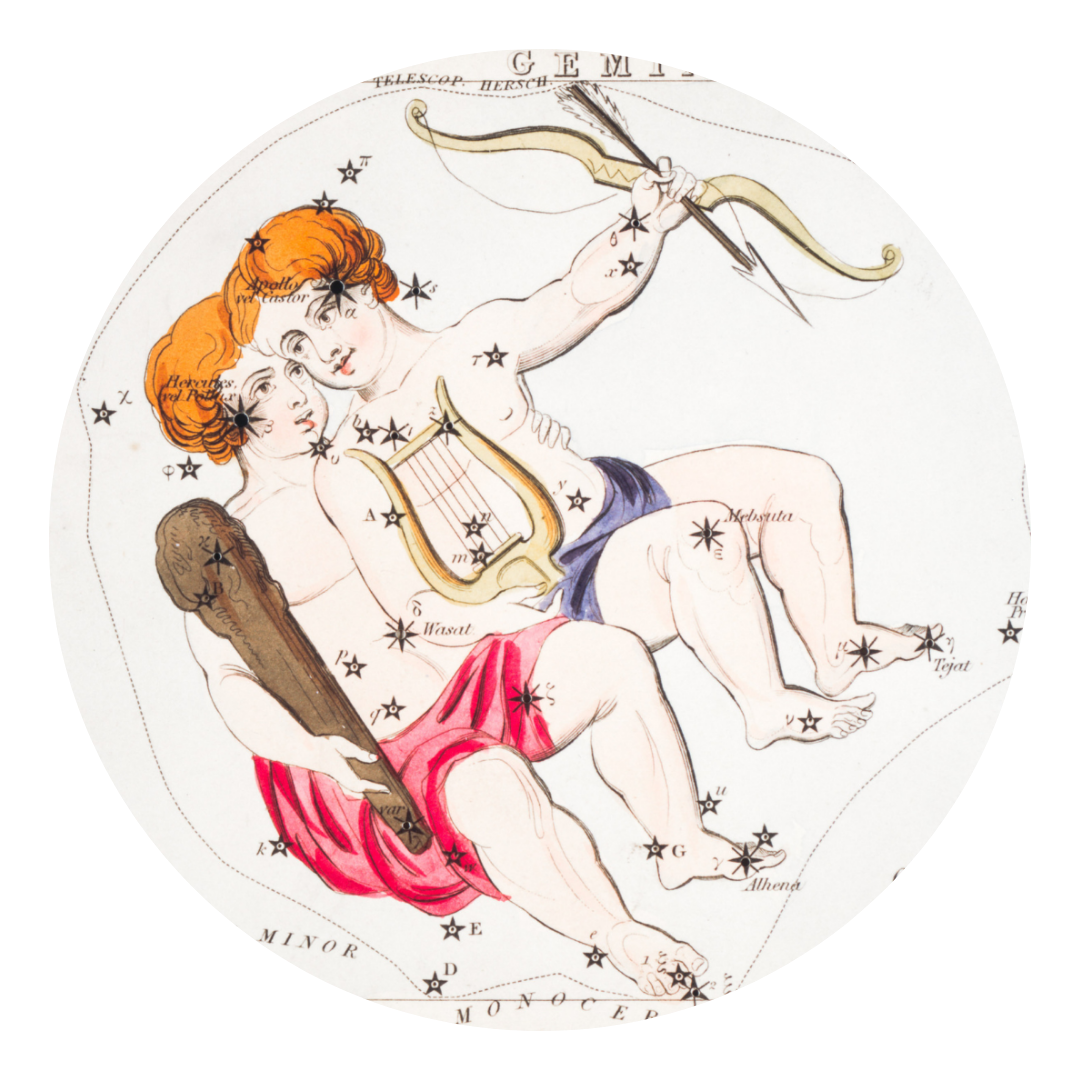
Intelligent, communicative, curious, witty, adaptable, versatile, mentally agile, synergistic, socially attuned, quick-thinking, inquisitive, changeable. Gemini energy is oriented toward gathering information, exchanging ideas, and making connections through language, thought, and interaction. It thrives on mental stimulation, variety, and the freedom to explore multiple perspectives at once.
When imbalanced, Gemini energy may express as restlessness, inconsistency, superficiality, nervous energy, overthinking, gossip, scattered focus, volatility, or difficulty following ideas through to completion.
Gemini represents the awakening of the mind and the recognition of life’s inherent duality. As the first air sign, it teaches that meaning is generated through dialogue, comparison, and curiosity rather than fixed conclusions. Wherever Gemini is active in a chart, it points to where questions multiply, information circulates, and learning happens through interaction and exchange. This energy seeks connection through language and shared understanding, reminding us that growth occurs by staying open, flexible, and willing to engage with multiple truths at once.
-
Element: Water
Modality: Cardinal
Ruled by: The Moon
Sensitive, nurturing, empathetic, intuitive, emotionally perceptive, protective, loyal, family-oriented, receptive, memory-rich, security-seeking. Cancer energy is oriented toward care, belonging, and emotional safety, with a strong instinct to protect what feels familiar or vulnerable. It responds deeply to emotional environments and is attuned to subtle shifts in mood, atmosphere, and relational needs.
When imbalanced, Cancer energy may express as moodiness, over-sensitivity, clinginess, avoidance of conflict, defensiveness, insecurity, emotional overwhelm, or difficulty letting go.
Cancer governs the inner life—what feels like home, what provides comfort, and where emotional roots are formed. As a cardinal water sign ruled by the Moon, it initiates feeling, bonding, and emotional awareness through cyclical rhythms and changing inner landscapes. Wherever Cancer is active in a chart, it reveals where protection is sought, where nurturing is required, and how emotional security is created and maintained. This energy invites retreat, reflection, and care for the inner child, emphasizing the importance of building a safe internal foundation from which to engage the outer world.
-
Element: Fire
Modality: Fixed
Ruled by: The Sun
Expressive, warm, confident, radiant, loyal, proud, creative, charismatic, dramatic, bold, performative, heart-centered. Leo energy is oriented toward visibility, creative self-expression, and the desire to shine authentically. It carries a natural magnetism and seeks to lead through warmth, generosity, and personal presence.
When imbalanced, Leo energy may express as excessive pride, attention-seeking, vanity, arrogance, dramatization, domination, impulsivity, or over-reliance on external validation.
Leo represents the development of identity through creative expression and self-recognition. Ruled by the Sun, it governs vitality, purpose, and the drive to be seen and acknowledged for one’s unique gifts. Wherever Leo is active in a chart, it reveals where confidence is built, where creativity seeks expression, and where leadership emerges through authenticity rather than force. This energy invites wholehearted participation in life, encouraging joy, courage, and generosity as pathways to meaningful self-expression and connection with others.
-
Element: Earth
Modality: Mutable
Ruled by: Mercury; Chiron
Thoughtful, analytical, discerning, detail-oriented, practical, organized, diligent, health-conscious, service-oriented, modest, methodical, precise, reliable, improvement-focused. Virgo energy is oriented toward refinement, skill-building, and the responsible application of knowledge in service of well-being. It values usefulness, integrity, and careful attention to systems, routines, and processes that support daily life.
When imbalanced, Virgo energy may express as excessive perfectionism, overthinking, self-criticism, judgment toward self or others, worry, workaholism, or becoming overly focused on flaws rather than function.
Virgo represents the impulse to refine, heal, and bring order to what has been created. As a mutable earth sign, it focuses on practical improvement—taking what exists and making it more functional, sustainable, and aligned with purpose. Wherever Virgo is active in a chart, it reveals where discernment is needed, where habits and systems require attention, and how care is expressed through service and skill. This energy invites thoughtful stewardship of the body, the environment, and daily life, emphasizing growth through humility, precision, and a commitment to meaningful contribution.
-
Element: Air
Modality: Cardinal
Ruled by: Venus
Romantic, fair-minded, diplomatic, tactful, collaborative, refined, aesthetically attuned, socially aware, relational, discerning, harmony-seeking. Libra energy is oriented toward balance, reciprocity, and the creation of harmony through relationship, dialogue, and thoughtful exchange. It values equity, beauty, and mutual consideration, with a strong impulse to weigh perspectives and find the middle path.
When imbalanced, Libra energy may express as indecision, people-pleasing, avoidance of conflict, over-accommodation, superficial harmony, self-abandonment, or difficulty taking clear, assertive action.
Libra marks the turning point toward relationship and reflection, asking how identity is shaped through connection with others. As a cardinal air sign, it initiates dialogue, partnership, and ethical consideration, seeking equilibrium between opposing forces. Wherever Libra is active in a chart, it highlights where balance must be restored, where discernment is required, and how harmony is negotiated rather than assumed. This energy invites conscious relating—learning to honor both self and other—emphasizing fairness, shared values, and the art of creating connection without losing one’s center.
-
Element: Water
Modality: Fixed
Ruled by: Mars; Pluto
Intense, passionate, magnetic, private, emotionally penetrating, resilient, strategic, investigative, powerful, transformative, instinct-driven, tenacious. Scorpio energy is oriented toward depth, truth, and emotional honesty, with a natural capacity to confront what is hidden, taboo, or unresolved. It values authenticity over comfort and seeks meaningful bonds that involve trust, vulnerability, and shared power.
When imbalanced, Scorpio energy may express as secrecy, control issues, jealousy, obsession, resentment, emotional manipulation, destructiveness, or avoidance of painful truths.
Scorpio represents the process of transformation through confrontation with the shadow. As a fixed water sign ruled by Mars and Pluto, it sustains emotional intensity in order to reveal what must be released, healed, or reborn. Wherever Scorpio is active in a chart, it points to where deep emotional work is required, where power dynamics are examined, and where truth must replace denial. This energy invites profound change by asking us to face uncomfortable realities, metabolize loss, and reclaim vitality through honest engagement with the depths of feeling and desire.
-
Element: Fire
Modality: Mutable
Ruled by: Jupiter
Inspiring, adventurous, optimistic, big-minded, curious, candid, philosophical, freedom-loving, exploratory, idealistic, expansive, truth-seeking. Sagittarius energy is oriented toward growth through experience, exploration, and the pursuit of meaning. It values honesty, perspective, and the freedom to move beyond limitations in order to understand life more fully.
When imbalanced, Sagittarius energy may express as restlessness, recklessness, lack of follow-through, bluntness, overextension, inconsistency, dogmatism, or difficulty honoring boundaries.
Sagittarius represents the drive to seek truth beyond the familiar horizon. As a mutable fire sign ruled by Jupiter, it expands awareness through philosophy, travel, learning, and belief systems that offer a broader view of life. Wherever Sagittarius is active in a chart, it highlights where meaning is sought, where faith is tested, and where growth occurs through openness to new experiences. This energy invites trust in a larger vision, encouraging curiosity, optimism, and the willingness to keep moving toward understanding rather than certainty.
-
Element: Earth
Modality: Cardinal
Ruled by: Saturn
Diligent, disciplined, driven, responsible, persevering, strategic, restrained, practical, tradition-oriented, self-controlled, authoritative, goal-focused. Capricorn energy is oriented toward achievement, structure, and long-term mastery, emphasizing responsibility, integrity, and the steady pursuit of meaningful goals. It values endurance, realism, and the capacity to work patiently toward tangible results.
When imbalanced, Capricorn energy may express as workaholism, rigidity, pessimism, emotional reserve, excessive self-reliance, materialism, authoritarian tendencies, or allowing ambition to override emotional and relational needs.
Capricorn represents the impulse to build, govern, and bring ambition into concrete form. As a cardinal earth sign ruled by Saturn, it initiates structure through discipline, commitment, and an understanding of cause and effect. Wherever Capricorn is active in a chart, it highlights where responsibility must be assumed, where mastery is earned over time, and how authority is developed through integrity and effort. This energy invites conscious engagement with limits and obligations, emphasizing growth through perseverance, self-respect, and the alignment of ambition with ethical purpose.
-
Element: Air
Modality: Fixed
Ruled by: Uranus; Saturn
Original, innovative, independent, forward-thinking, intellectually curious, unconventional, humanitarian, idealistic, inventive, community-minded, detached, systems-oriented. Aquarius energy is oriented toward progress, reform, and the pursuit of freedom through new ideas, perspectives, and collective advancement. It values originality, autonomy, and solutions that benefit the greater whole rather than the individual alone.
When imbalanced, Aquarius energy may express as emotional detachment, rebellion for its own sake, rigidity around ideals, aloofness, extremism, contrarianism, or difficulty integrating personal feeling with collective vision.
Aquarius represents the impulse to innovate, liberate, and reimagine the future. As a fixed air sign ruled by Uranus and Saturn, it sustains visionary ideas while challenging outdated systems and structures. Wherever Aquarius is active in a chart, it highlights where detachment allows for clarity, where new frameworks are needed, and how individuality can serve collective evolution. This energy invites observation from a higher vantage point, encouraging originality, experimentation, and the courage to disrupt norms in service of progress and shared benefit.
-
Element: Water
Modality: Mutable
Ruled by: Neptune
Imaginative, intuitive, compassionate, empathetic, sensitive, artistic, dreamy, adaptable, gentle, impressionable, soulful, otherworldly. Pisces energy is oriented toward connection, transcendence, and emotional attunement, with a natural ability to sense subtle currents within individuals and the collective. It values compassion, creativity, and spiritual awareness, often moving fluidly between inner and outer worlds.
When imbalanced, Pisces energy may express as escapism, over-sensitivity, lack of boundaries, confusion, passivity, impracticality, self-sacrifice to the point of depletion, or becoming lost in fantasy or victim narratives.
Pisces represents culmination, dissolution, and the return to unity at the end of the zodiacal cycle. As a mutable water sign ruled by Neptune, it softens boundaries and dissolves distinctions, inviting surrender to the larger web of life. Wherever Pisces is active in a chart, it highlights where intuition guides more than logic, where compassion becomes a form of wisdom, and where healing occurs through acceptance rather than control. This energy opens liminal spaces—between worlds, roles, and identities—encouraging empathy, spiritual awareness, and the capacity to hold many truths at once.
houses
areas of life
The houses describe the areas of life where planetary energy is expressed. After a planet’s energy is filtered through a zodiac sign, the houses show where that expression tends to unfold in lived experience.
In other words, the houses indicate the parts of life where these archetypal energies are directed and where their influence is most likely to be experienced.
-
The domain of identity, embodiment, and initiation; where the self takes shape and meets the world.
The 1st House always begins at the Rising sign, which sets the orientation of the entire chart and determines how the remaining houses fall into place. It represents your sense of self, physical body, and the way you naturally present yourself to others. It governs identity, self-image, appearance, mannerisms, and the overall “vibe” you give off, especially in new situations. This house reflects how you experience yourself subjectively—your motivations, instincts, personal needs, and the lens through which you approach life. It is associated with beginnings, independence, and individuation, highlighting how you initiate experiences and develop confidence in who you are becoming. The 1st House speaks to trusting your gut, claiming your personal perspective, and aligning outward expression with inner identity.
-
The domain of value, resources, and material security; where worth is defined and sustained.
The 2nd House centers on your relationship with resources, including money, possessions, property, and income, as well as the internal resources that support stability and self-reliance. It reflects your personal value system—what you prioritize, invest in, and claim as your own—and how those values shape financial decisions, spending habits, and long-term security. This house is closely tied to self-worth and mastery, highlighting the connection between what you value internally and what you build materially. It also governs sensory experience and the body’s needs, emphasizing nourishment, comfort, and tangible support as foundations for safety and survival.
-
The domain of communication, learning, and immediate environment; where the mind engages with the world close at hand.
The 3rd House governs how you think, learn, and communicate, shaping your mental patterns, curiosity, and everyday expression through speaking, writing, and conversation. It reflects early education, adolescent experiences, and the development of your voice, including how ideas are processed, shared, and understood. This house also rules your local environment—siblings, neighbors, peers, and extended family—as well as short trips, daily routines, and personal learning. The 3rd House highlights how you interact with your surroundings, exchange information, and make meaning through frequent, short-term engagements that gradually shape your worldview.
-
The domain of home, emotional foundation, and inner security; where roots, memory, and belonging are formed.
The 4th House anchors you to your origins, shaping your sense of safety through home life, family of origin, and ancestral lineage. It governs your inner world, emotional needs, and private self, including early childhood experiences and the patterns inherited from caregivers and family systems. This house reflects how you nurture and are nurtured, how intimacy is formed, and what you require to feel emotionally secure and at home—both externally and within yourself. The 4th House also holds the past, memory, and subconscious influences that quietly inform identity, offering insight into how personal and generational history continues to shape your present.
-
The domain of creativity, pleasure, and heartfelt expression; where joy, desire, and self-expression come alive.
The 5th House reflects how you create, play, and pursue what brings excitement and meaning to life. It governs artistic expression, romance, love affairs, pleasure, and leisure, as well as children, parenting, and inner child themes. This house speaks to the courage to be seen and to share your gifts openly, highlighting where you give your heart, seek affection, and take creative or emotional risks. Through art, play, romance, and self-expression, the 5th House reveals how you experience joy, celebrate your individuality, and engage the world from a place of passion and authenticity.
-
The domain of daily life, health, and service; where routines, responsibility, and care are practiced.
The 6th House governs your everyday rhythms, including work, responsibilities, habits, and the systems that support physical and mental well-being. It reflects how you care for your body through routine, nutrition, hygiene, and wellness practices, as well as how you organize your time and energy to meet daily demands. This house is also connected to service—how you contribute your skills, show up for others, collaborate with coworkers, and tend to what depends on you, including pets. The 6th House highlights where improvement, refinement, and skill-building occur through consistency, attention, and intentional care.
-
The domain of partnership, commitment, and relational exchange; where the self meets the other in shared agreement.
The 7th House governs your close, committed relationships, including romantic partnerships, marriage, business collaborations, and one-on-one dynamics of all kinds. It reflects how you relate, negotiate, and share space with others, highlighting patterns of cooperation, interdependence, and mutual responsibility. This house emphasizes the contractual nature of relationships—spoken or unspoken agreements about how two individuals show up, give, receive, and remain accountable to one another. It also serves as a mirror, revealing relational dynamics, boundaries, and projections, including open adversaries or conflicts that arise through direct engagement. Through the 7th House, awareness develops around balance, fairness, and the ongoing negotiation between honoring others and preserving the self.
-
The domain of transformation, intimacy, and shared power; where merging, loss, and rebirth reshape the self.
The 8th House governs deep psychological processes, emotional and sexual intimacy, and the experiences that require vulnerability, surrender, and trust. It reflects how you engage with shared resources—such as finances, debts, inheritance, taxes, and support from others—as well as the power dynamics that emerge through merging lives, bodies, and responsibilities. This house is closely associated with death and rebirth, grief, crisis, and profound change, highlighting where transformation occurs through confronting fear, shadow material, and the unconscious. It also speaks to healing, therapy, ritual, and mystical or psychological insight, revealing how truth is uncovered and how personal power is reclaimed through deep inner work.
-
The domain of meaning, belief, and expanded perspective; where understanding is sought beyond the familiar.
The 9th House governs philosophy, spirituality, religion, and belief systems, reflecting how you make sense of life and orient yourself toward what feels true and meaningful. It is associated with higher education, teachers, mentors, publishing, and advanced learning, as well as long-distance travel and cross-cultural exchange that broaden worldview and understanding. This house highlights the search for truth, wisdom, and justice, inviting growth through exploration—whether through study, spiritual inquiry, adventure, or exposure to different cultures and ideas. The 9th House reveals how you develop faith in yourself and in life, shaping the guiding principles that inform your choices and sense of purpose.
-
The domain of vocation, reputation, and public responsibility; where purpose is expressed through visible contribution.
The 10th House governs career, ambition, and long-term goals, reflecting how you engage with authority, responsibility, and achievement in the public sphere. It speaks to reputation, social status, and the roles or titles by which you are known, including professional identity, leadership positions, and contributions recognized by others. This house highlights the drive to accomplish, to build mastery over time, and to align personal authority with meaningful work. It also reflects legacy—what you strive toward, how you measure success, and how your efforts shape your standing within community, society, or family systems.
-
The domain of community, collective vision, and future-oriented contribution; where individuality meets shared purpose.
The 11th House governs friendships, chosen family, and the networks and communities you align with beyond intimate partnerships. It reflects how you engage with groups, causes, and collective efforts, including social, political, humanitarian, or civic involvement. This house is closely tied to hopes, dreams, and long-term aspirations, revealing what you envision for the future and how your ideals connect to something larger than yourself. The 11th House highlights how you offer your unique perspective or talents to the collective, fostering connection, innovation, and a sense of belonging within broader systems.
-
The domain of the unconscious, spiritual surrender, and completion; where inner cycles end and deeper awareness begins.
The 12th House governs the inner landscape of the psyche, including the subconscious, hidden patterns, and experiences that unfold beyond conscious control. It is associated with solitude, retreat, dreaming, spirituality, and the processing of unseen or unconscious material, including grief, fantasy, illusion, and psychic sensitivity. This house reflects where ego dissolves and where healing occurs through surrender, compassion, and trust, often requiring withdrawal from external demands in order to listen inwardly. The 12th House also speaks to endings and release—what must be reviewed, forgiven, or let go of in order to move forward—revealing quiet strengths, spiritual insight, and the capacity to reconnect with something larger than the self.
elements
fundamental qualities
The elements describe the fundamental energetic qualities expressed through the zodiac signs. Each element reflects a different way energy moves and interacts with the world.
Every zodiac sign belongs to one of four elements—fire, earth, air, or water—which shape the overall temperament and orientation of that sign. Together, the elements help describe whether energy tends to be expressed through action, practicality, intellect, or emotion.
-
Associated Signs:
Aries
Leo
Sagittarius
Fire ignites life force, creativity, and motivation, initiating movement where stagnation has taken hold. It inspires action, expands the heart, and catalyzes transformation by burning away what is no longer viable. In its conscious expression, Fire acts as a sacred, restorative force; when uncontained, it can become destructive rather than illuminating.
-
Associated Signs:
Gemini
Libra
Aquarius
Air circulates ideas, information, and awareness, facilitating communication, connection, and exchange. It lifts consciousness through intellect, language, and relationship, creating space between things so perspective and understanding can form. As the least dense element, Air disperses energy outward, linking individuals, groups, and systems through thought and shared meaning.
-
Associated Signs:
Cancer
Scorpio
Pisces
Water flows through feeling, intuition, and emotional connection, attuning awareness to what exists beneath the surface. It binds experience through empathy, memory, and sensitivity, allowing energy to be felt, absorbed, and metabolized rather than analyzed. As a fluid and embodied element, Water adapts to its container—sometimes moving gently, sometimes with great depth or force—revealing the power of emotional truth and inner perception.
-
Associated Signs:
Taurus
Virgo
Capricorn
Earth grounds and stabilizes energy, giving form, structure, and durability to what would otherwise remain abstract or intangible. It governs material reality, responsibility, values, and the systems that sustain life over time, offering a practical check on vision, emotion, and momentum. Through Earth, ideas become plans, feelings become needs, and effort becomes something tangible, useful, and lasting.
modalities
operational mode
The modalities describe how energy moves and operates over time. They reflect the style in which planetary and elemental energies tend to express themselves in experience.
Each zodiac sign belongs to one of three modalities—cardinal, fixed, or mutable—which describe whether energy tends to initiate, sustain, or adapt.
-
Associated Signs:
Aries
Cancer
Libra
Capricorn
Cardinal modalities initiate movement and mark beginnings. They are oriented toward action, leadership, and forward momentum, transforming ideas or impulses into tangible direction. Cardinal energy brings things into motion and sets cycles in motion, often responding quickly to opportunity or necessity.
-
Associated Signs:
Taurus
Leo
Scorpio
Aquarius
Fixed modalities sustain, stabilize, and maintain what has been started. They concentrate energy, deepen commitment, and preserve continuity, favoring consistency over change. Fixed energy resists disruption, focusing on values, desires, and instinctual patterns that anchor experience over time.
-
Associated Signs:
Gemini
Virgo
Sagittarius
Pisces
Mutable modalities adapt, transition, and facilitate change.
They are responsive and flexible, guiding energy through endings, refinements, and transformations between cycles. Mutable energy operates in liminal spaces, teaching how to release, recalibrate, and prepare for what comes next.
continue exploring

on the house
•
on the house •
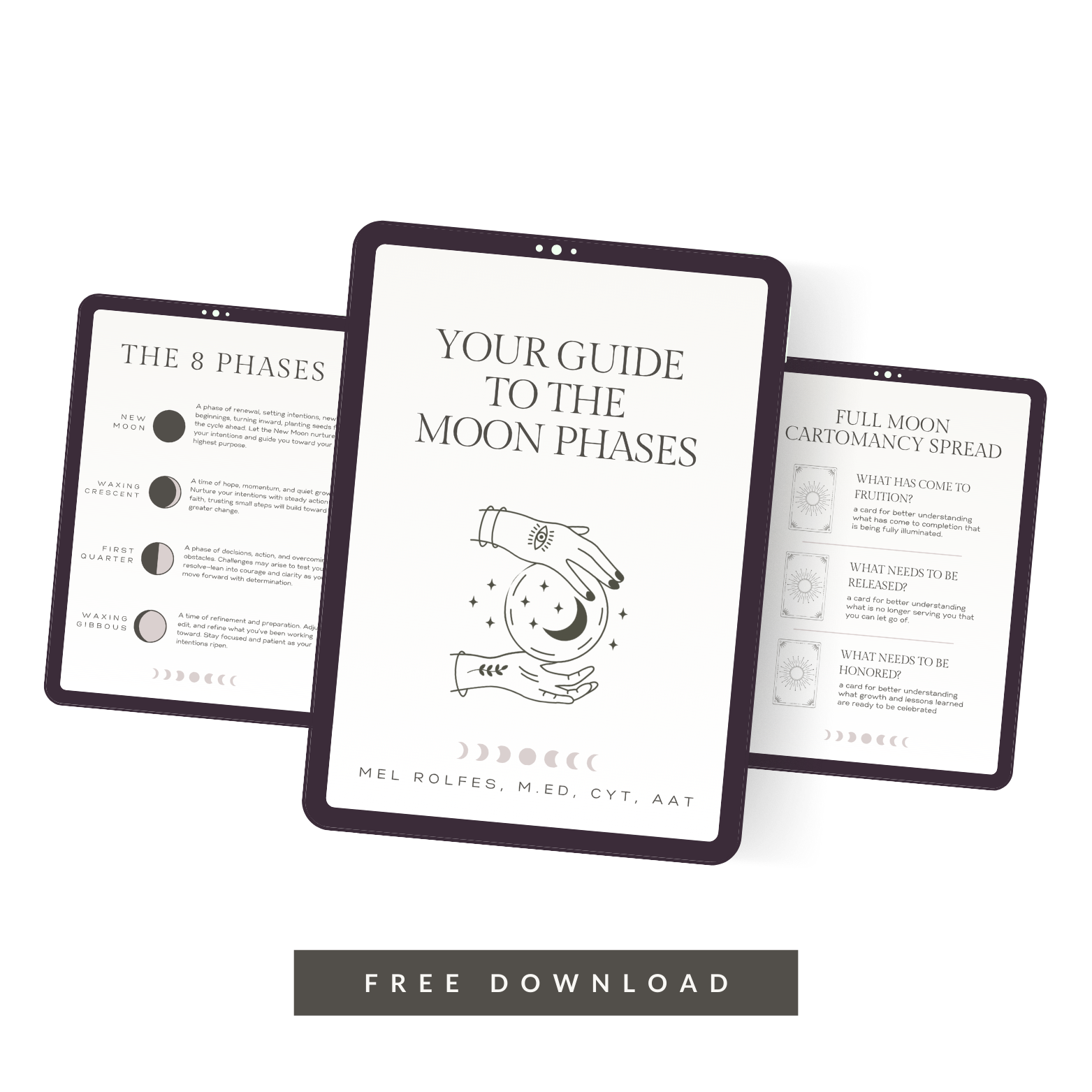
a beginner’s guide to living in rhythm with, and understanding the phases of, the Moon
I reside and practice on stolen land that belongs to the Yesan (Tutelo) people with ties to the Monacan Indian Nation. Learn about and support the Indigenous community connected to this land and learn about the land you live on.