Turning of the Wheel: Beltane
A seasonal reflection on connection, vitality, and peak expression
Around April 30 to May 1, those of us in the Northern Hemisphere arrive at Beltane, a seasonal turning point that marks the midpoint between the Spring Equinox and the Summer Solstice. By this time, the shift into spring is no longer subtle. The landscape is fully alive. Growth is visible, active, and ongoing.
Beltane is a traditional Celtic festival associated with fire, fertility, and the height of spring’s vitality. Where earlier points in the seasonal cycle emphasized preparation and emergence, Beltane reflects a different phase entirely. Life is no longer forming or beginning to surface. It is expressing itself.
Historically, this was a time tied to movement, connection, and the management of living systems already in motion. Livestock were moved to summer pastures. Fields were actively growing. Communities gathered outdoors again. The season carried a sense of participation in life rather than anticipation of it.
If Imbolc reflected quiet preparation and Ostara marked emergence, Beltane represents full expression. The conditions that have been building since winter are now in motion. What was once internal has become external.
Living in rhythm with the seasons invites us to notice this shift. The Wheel of the Year offers a way of tracking not just time, but phases of experience. Beltane marks a point where energy is outward, relational, and active.

stay connected
join my mailing list for the occasional inbox gem, including a monthly newsletter sent the day before each New Moon.
The Wheel of the Year
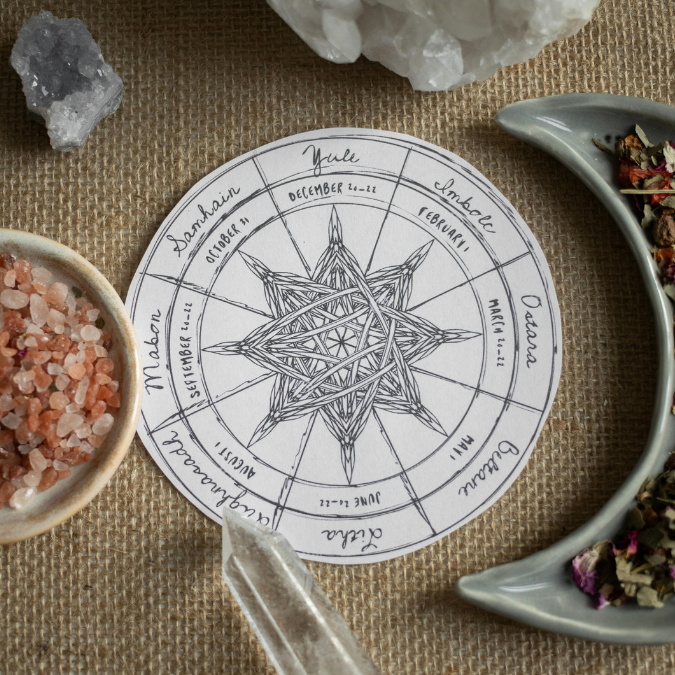
The Wheel of the Year is a seasonal and cyclical calendar marked by eight sabbats, or sacred festivals. These include two solstices, two equinoxes, and four cross quarter days that fall between them. Together, they reflect nature’s rhythms and the ongoing cycle of life, death, rest, and renewal. These turning points offer grounding, nature-based milestones that can support reflection, ritual, and our psycho-spiritual practice throughout the year. They include:
Yule (Winter Solstice), around December 20-22
Imbolc, around February 1-2
Ostara (Spring Equinox), around March 19-21
Beltane, around April 30-May 1
Litha (Midsummer), around June 20-22
Lughnasadh (Lammas), around August 1
Mabon (Autumn Equinox), around September 21-23
Samhain (around October 31-November 1)
Each of these sabbats carries its own distinct energy, symbolism, and ways of being observed. As we move through them, we are invited to notice how the outer landscape mirrors our inner worlds, shifting us between expansion and contraction, light and dark, action and rest.
With Beltane, we arrive at a point of full engagement with the growing season. What follows is an exploration of this seasonal turning point through its themes, symbolism, and traditional associations, as well as the ways people have historically marked this time through fire, movement, and connection. From there, we will turn toward simple reflections that honor vitality, expression, and participation in life.

Beltane Themes and Energetic Meanings
Vitality and Life Force
By early May, growth is no longer tentative. Plants are established. Days are longer. Temperatures are warmer. The landscape reflects sustained energy rather than initial change.
This vitality is not about intensity for its own sake. It reflects capacity. The ability to sustain movement, engagement, and participation over time.
Expression After Emergence
Ostara marked the beginning of visible growth. Beltane continues that process, but with greater clarity and momentum. What has been forming now asks to be expressed more fully.
This can show up as taking action, sharing ideas, or allowing something to be seen that was previously kept internal.
Connection and Relational Energy
Beltane has long been associated with connection. Not just in a romantic sense, but in a broader relational context. People gather. Systems interact. Growth happens through relationship.
This is a season that emphasizes interaction over isolation. Participation rather than observation.
Fertility as Creative Potential
Fertility at Beltane is often understood symbolically. It reflects the conditions that support creation, whether that is biological, creative, relational, or structural.
The focus is not only on what is being created, but on what makes creation possible. Environment, support, timing, and willingness all play a role.
Movement and Participation
Earlier points in the seasonal cycle emphasized reflection and preparation. Beltane shifts toward movement.
This is a time that supports trying, engaging, and responding. Not everything needs to be fully formed to begin participating in it.
Trusting Momentum
There is a natural momentum present in this part of the year. Growth is already happening. The question becomes how to work with it rather than how to initiate it.
Beltane invites trust in processes that are already underway.
In my online yoga classes, we explore what it looks like to stay connected to our bodies as things begin to pick up, moving in a way that feels steady, responsive, and sustainable. You’re always welcome to join.

Beltane Symbolism and Seasonal Associations
Fire
Fire is central to Beltane traditions. Historically, large communal fires were lit as part of seasonal rituals tied to protection, purification, and transition.
At this point in the seasonal cycle, fire represents activation. It reflects energy that is being used, directed, and expressed.
Flowers and Blossoms
By early May, many plants are in bloom. Blossoms represent a stage of development that is both visible and temporary. They signal a peak in growth that will eventually lead to fruit.
Green Growth and Abundance
The landscape at Beltane is marked by visible abundance. Grass is growing. Trees are full. Fields are active.
This reflects a shift from potential to presence. Growth is no longer theoretical. It is here.
Maypole and Community Ritual
The maypole is one of the most recognizable Beltane symbols. Traditionally, it involved weaving ribbons around a central pole through coordinated movement.
This act reflects interconnection, cooperation, and shared participation in seasonal celebration.
Seasonal Colors
There is no fixed or historically defined color palette for Beltane. The colors associated with this time of year come from the landscape itself.
By early May, the environment is fully alive and in motion. Growth is established, trees are in bloom, and the days are noticeably warmer and longer.
Deep green for established growth and abundance
Soft white and cream for blossoms and flowering trees
Yellow or gold for increasing sunlight and warmth
Rose, red, or pink for vitality, life force, and active expression
Beltane Traditional Observances
Fire Rituals and Gatherings
Historically, Beltane was marked by large outdoor fires. These gatherings served both practical and symbolic purposes, bringing communities together at a time when outdoor life resumed more fully.
Movement and Dance
Beltane traditions often included movement, whether through dancing, walking the land, or engaging in physical labor tied to the season.
This emphasis on movement reflects participation in the living environment rather than separation from it.
Decorating with Flowers and Greenery
Homes and communal spaces were often decorated with flowers, branches, and greenery. This practice brought the visible signs of the season indoors.
Time Spent Outdoors
Beltane aligns with a natural increase in time spent outside. Work, social connection, and daily life begin to shift outward again.
Marking Transitions
As a cross quarter day, Beltane represents a midpoint. It offers an opportunity to acknowledge how far the season has progressed and to adjust accordingly.
Beltane Reflections
Noticing Where Life Is Already Moving:
Where in your life is there already momentum. What feels active, even if it is not fully defined.Allowing Yourself to Be Seen:
What has been forming that now feels ready to be expressed more openly. Where might visibility feel uncomfortable but necessary.Exploring Connection:
Where are you being invited into greater connection. What relationships, environments, or ideas are asking for your participation.Working With What Is Available:
What resources, energy, or opportunities are already present. How might you engage with what is here rather than waiting for something different.Balancing Action and Sustainability:
Where might you be pushing too hard, and where might you be holding back. What would a sustainable level of engagement look like right now.
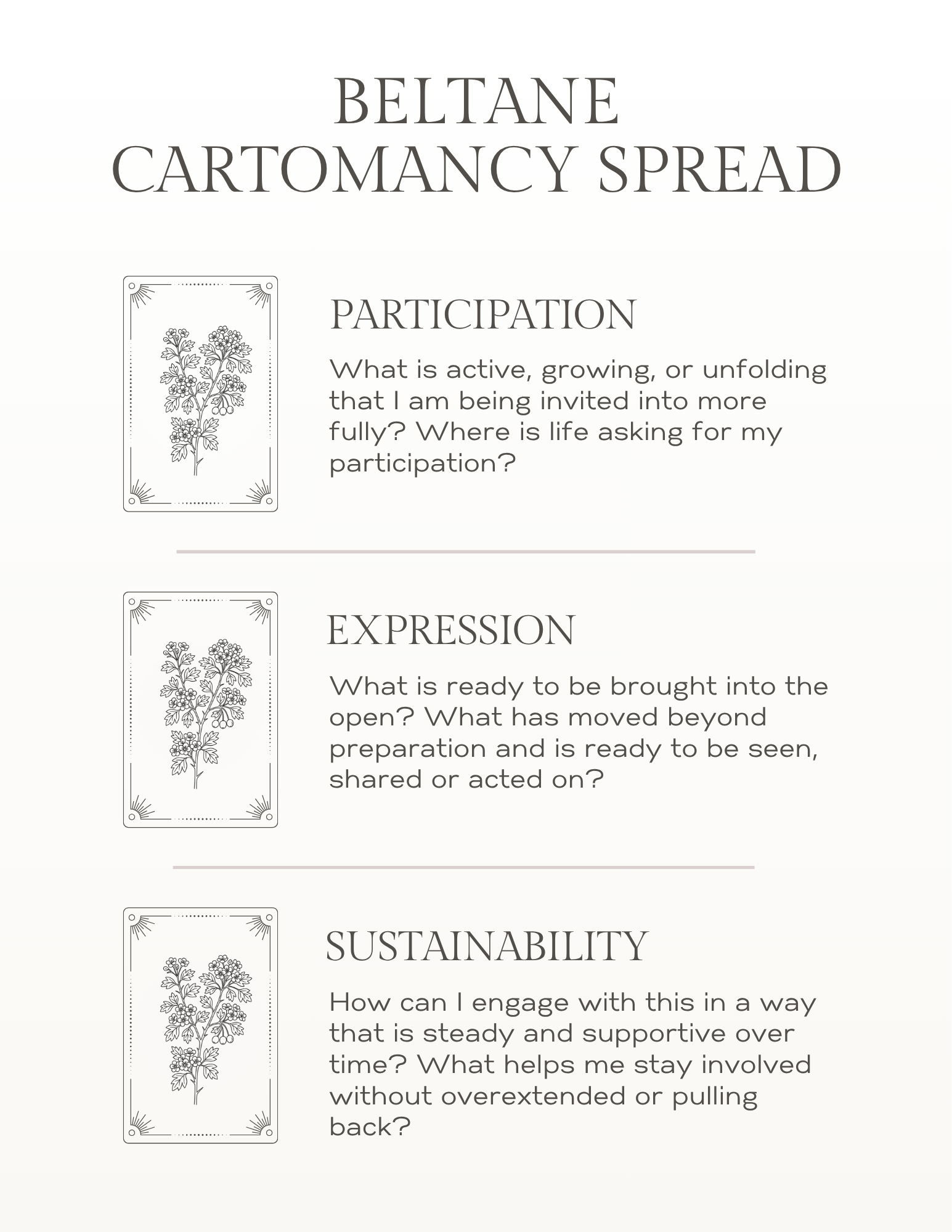
Cartomancy
The following three card tarot or oracle spread is offered as a reflective practice for Beltane. It centers on this point in the seasonal cycle where growth is active and visible. Rather than focusing on outcomes, this spread invites reflection on how you are engaging with what is already in motion.
Wishing you all a blessed Beltane.

This post is offered for educational and reflective purposes only, and is not intended as medical or mental health care. Please see the full Disclaimer for details.
